For educational institutions, admission season is the ultimate high-stakes sprint. But while universities pour massive budgets into digital ads by doing PPC mistakes to capture parent interest, many are effectively shouting into a void. Without a data-backed strategy, those “premium” clicks often lead to empty classrooms and wasted marketing rupees.
The secret to a full cohort isn’t just spending more; it’s precision. An elite performance-driven digital marketing agency doesn’t guess; they use hyper-targeted PPC and relentless optimization to turn ad spend into high-quality enrollments. By spotting the common traps that derail most university campaigns, you can stop the “budget leak” and win the admission race before your competitors even cross the starting line.
Below are some of the most common paid marketing mistakes educational institutes make during the admission season.
1. Targeting the Wrong Audience
Imagine running a high-end educational institute in Delhi, but your ads are popping up for a family in Chennai who has no intention of relocating. Every time they click out of curiosity, your admission budget takes a hit.
The result? You’re “spending,” but you aren’t “recruiting.”
Comparison Table: Broad vs. Precision Targeting
Metric | Broad-Net Strategy (Mistake) | Precision-PPC (The Fix) |
Reach | 100,000+ (Unfiltered) | 15,000 (High-Intent) |
Click-Through Rate (CTR) | 1.5% | 4.8% |
Lead Quality | 80% Junk / Out of Station | 90% Local / Qualified |
Cost Per Lead (CPL) | ₹150-₹200 | ₹500- ₹700 |
Ad Wastage | High (40%+) | Minimal (<5%) |
One of the costliest blunders in educational marketing is the Broad-Net Trap. By trying to reach everyone, you often end up reaching no one who actually matters. Casting a wide net in PPC usually means catching nothing but wasted ad spend. When your audience is ‘everyone,’ you’re paying for clicks from people who aren’t even in your zip code.
A high-performance strategy trades the ‘one-size-fits-all’ mindset for surgical precision, syncing location, demographics, and real-time intent to put your brand exactly where the right parents and students are already looking.
2. Ignoring Keyword Research
Many institutes launch search ads without proper keyword planning. As a result, their ads may appear for irrelevant searches that do not lead to admissions.
Effective PPC campaigns use high-intent keywords such as:
- “best MBA institutes near me”
- “University Admission 2026”
- “top university in [city]”
A performance-focused marketing strategy ensures that ads appear only for searches related to admissions, increasing the chances of conversion.
Sending Traffic to a Poor Landing Page
Another common mistake is directing ad traffic to a general website page instead of a dedicated admission landing page.
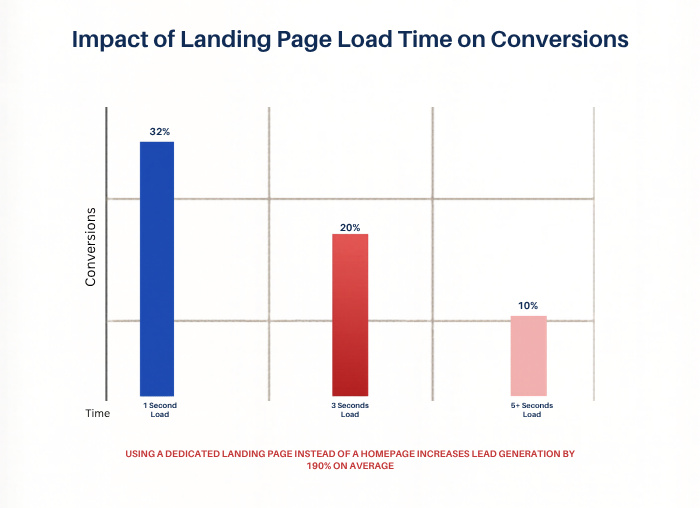
Using a dedicated landing page instead of a homepage increases lead generation by 190% on average.
A good landing page should include:
- Clear admission information
- Program highlights
- Strong call-to-action
- Easy inquiry or application form

Without an optimized landing page, even well-targeted ads may fail to convert visitors into leads.
4. Not Tracking Campaign Performance
Stop subsidizing ads that don’t perform. If you aren’t tracking every click back to a conversion, you aren’t marketing, you’re gambling. Our performance-first model utilizes a high-precision toolkit to track:
The Success Scorecard: Key Metrics That Define a High-ROI Educational Campaign
KPI | Healthy Range (2026) | Status |
CTR (Search) | Above 3.0% |
|
Landing Page Conv. Rate | 5% – 8% |
|
Lead-to-Site Visit Ratio | 1:10 |
|
Cost Per Enrollment | < 8% of Annual Fee |
|
These insights help optimize campaigns continuously during admission season.
5. Starting Paid Campaigns Too Late
Some university begin their advertising only when admissions are about to close. By that time, many students have already shortlisted institutions.
Starting campaigns early in the admission cycle helps educational institutions build awareness and stay visible when students begin researching options.
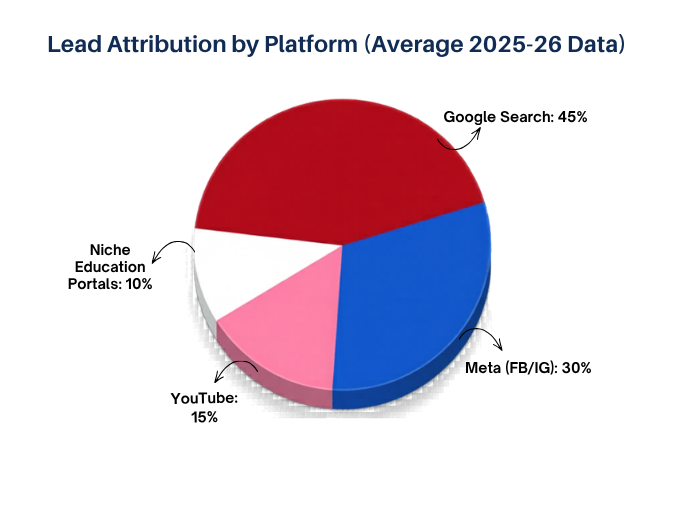
6. Not Using Multiple Advertising Platforms
Relying on a single platform is another mistake. Many institutes only run ads on search engines and ignore other channels. In 2026, a parent needs to see your university brand at least 7 times across different touchpoints before filling out an inquiry form.
A strong digital marketing strategy combines:
- Search advertising
- Social media ads
- Display campaigns
- Remarketing campaigns
This multi-platform approach increases visibility and improves lead generation.
Conclusion
When done right, paid ads are like a high-speed elevator for your admission inquiries. But for most institutes, that elevator is stuck between floors. Why? Because “just running ads” isn’t a strategy. If your campaigns are suffering from “The Big Three” fuzzy targeting, landing pages that bore parents to tears, or zero conversion tracking, you’re essentially donating your budget to big tech.
The Game-Changer?
Don’t let another admission season pass with “leaky” budgets and empty seats. While most agencies offer generic traffic, Tech Digitics specializes in the high-stakes world of educational PPC. With over 16 years of experience and a track record of delivering 20M+ student leads, we don’t just run ads; we build precision-engineered admission funnels that turn curious parents into enrolled students. Our performance-first approach ensures that every rupee of your marketing spend is optimized for high-quality inquiries and measurable ROI. Contact us today!
Why is PPC advertising important for educational institutions' admissions?
PPC advertising helps educational institutions appear at the top of search results when students and parents actively search for admissions. This increases visibility and generates high-quality admission inquiries quickly.
When should an educational university start paid marketing campaigns for admissions?
Universities should ideally start their paid campaigns 3–6 months before the admission season. Early campaigns help build awareness and capture students during their research phase.
How can educational institutions improve the performance of their admission campaigns?
Educational Institutions can improve campaign performance by using targeted keywords, optimized landing pages, proper audience targeting, and continuous campaign tracking through a performance-driven digital marketing strategy.